Walk into any newly finished apartment in Gulshan, Bashundhara, or Chattogram’s Khulshi today, and you’ll notice something different from just a few years ago. Bangladeshi homeowners are no longer simply copying Pinterest boards from Europe or the Gulf they’re demanding interiors that actually work for our climate, our space constraints, and our way of living.
As we move into 2026, interior design in Bangladesh is entering an exciting new phase. Rising urban density, unpredictable monsoon humidity, a growing appetite for sustainable materials, and a renewed pride in local craftsmanship are all converging to create a design language that is distinctly Bangladeshi – modern, but rooted.
Whether you’re renovating a compact flat in Mirpur, designing a family home in Sylhet, or fitting out a commercial office in Dhaka’s business district, this guide breaks down the ten biggest interior design trends you need to know for 2026 and how to apply them practically, without overspending or overcomplicating your space.
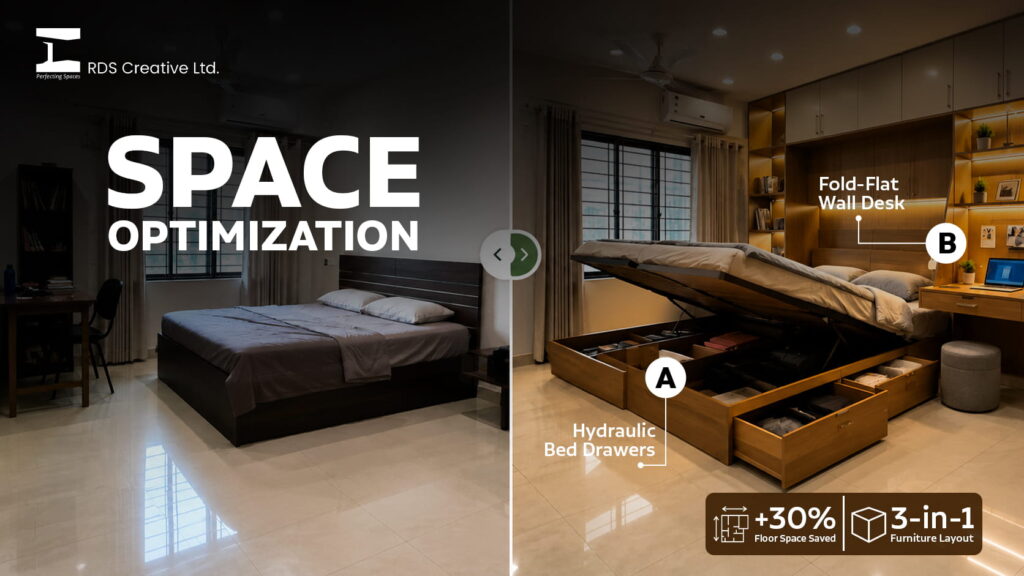
1. Multi-Functional Furniture for Compact Urban Apartments
Space is the single biggest constraint facing Dhaka and Chattogram homeowners. With apartment sizes shrinking even as families grow, multi-functional furniture has moved from “nice to have” to essential.
Expect to see more:
- Sofa-cum-beds and storage ottomans in living rooms that double as guest bedrooms
- Extendable dining tables that fold flat against the wall when not in use
- Bed frames with built-in drawers, replacing bulky wardrobes in smaller bedrooms
- Modular shelving units that can be reconfigured as family needs change
This trend isn’t about compromise — it’s about smart, durable design that respects how Bangladeshi families actually live in 900–1,200 square foot flats.
2. Climate-Responsive Design: Building for Humidity and Monsoon Season
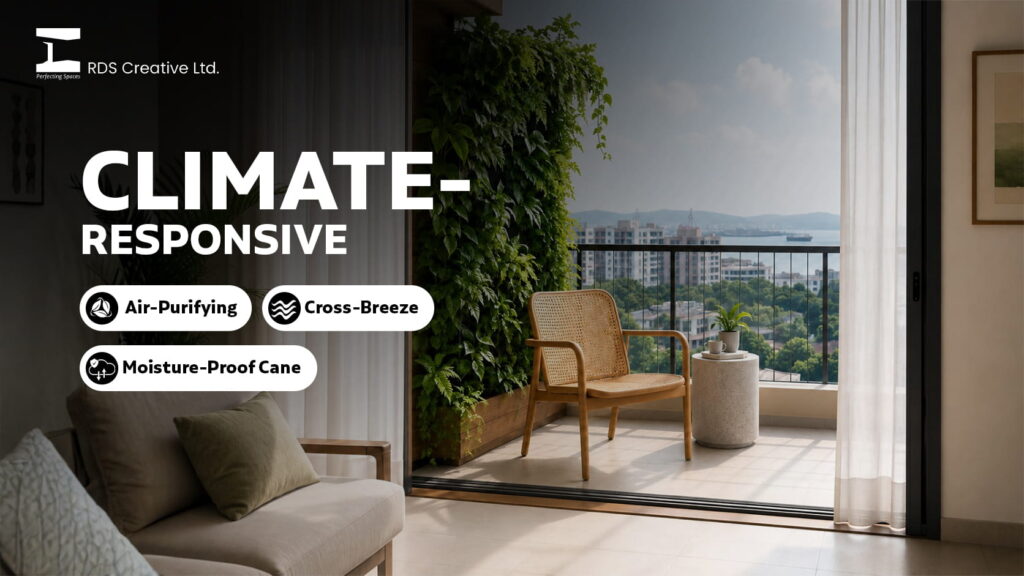
Bangladesh’s climate is not an afterthought in design – it should be the starting point. High humidity, heavy monsoon rainfall, and long stretches of intense heat all place real demands on materials and layout.
In 2026, expect climate-responsive design to become a standard consideration rather than a specialist request:
- Moisture-resistant laminates and marine plywood in kitchens and bathrooms to prevent swelling and mold
- Breathable, natural fabrics like cotton and linen for upholstery instead of heat-trapping synthetics
- Cross-ventilation-friendly layouts, positioning furniture to avoid blocking airflow between windows
- Anti-fungal paints and finishes for walls exposed to monsoon dampness
Designers who understand our climate are increasingly seen as more credible than those simply importing Western design templates. For guidance on selecting durable materials suited to tropical humidity, it’s worth reviewing the Whole Building Design Guide’s resource on moisture management strategies, a widely referenced building science resource.
3. Biophilic Design — Bringing Nature Indoors
With Dhaka’s green space shrinking, homeowners are compensating by bringing nature inside. Biophilic design – the practice of integrating natural elements into interiors – is one of the strongest global trends translating beautifully to the Bangladeshi context.
Key elements gaining popularity:
- Indoor plant corners using low-maintenance, low-light species like money plants, snake plants, and ferns
- Vertical gardens on balconies and building facades in space-starved apartments
- Natural materials – jute, cane, bamboo, and rattan — used in furniture and light fixtures
- Maximized natural light through sheer curtains and strategically placed mirrors
Beyond aesthetics, biophilic design has genuine wellness benefits improved air quality and reduced stress which matters greatly in Dhaka’s high-density, high-pollution urban environment.
4. Sustainable and Locally Sourced Materials
Sustainability is no longer a niche concern in Bangladeshi interiors – it’s becoming a genuine value driver, particularly among younger homeowners and commercial clients who want their spaces to reflect environmental responsibility.
Watch for growing use of:
- Bamboo and cane furniture, produced by local artisans and far more climate-appropriate than imported hardwoods
- Reclaimed and upcycled wood for feature walls, shelving, and accent furniture
- Handloom textiles from local weaving traditions used as upholstery, cushions, and wall hangings
- Low-VOC paints that reduce indoor air pollution, especially important in poorly ventilated apartments
This trend also supports local artisans and cottage industries, giving homeowners a way to combine ethical sourcing with authentic Bangladeshi craftsmanship.
5. Modern Interpretations of Bengali Heritage
There’s a growing cultural confidence in Bangladeshi interior design – a move away from imitating Middle Eastern or Western luxury aesthetics toward celebrating our own heritage in a contemporary way.
This shows up as:
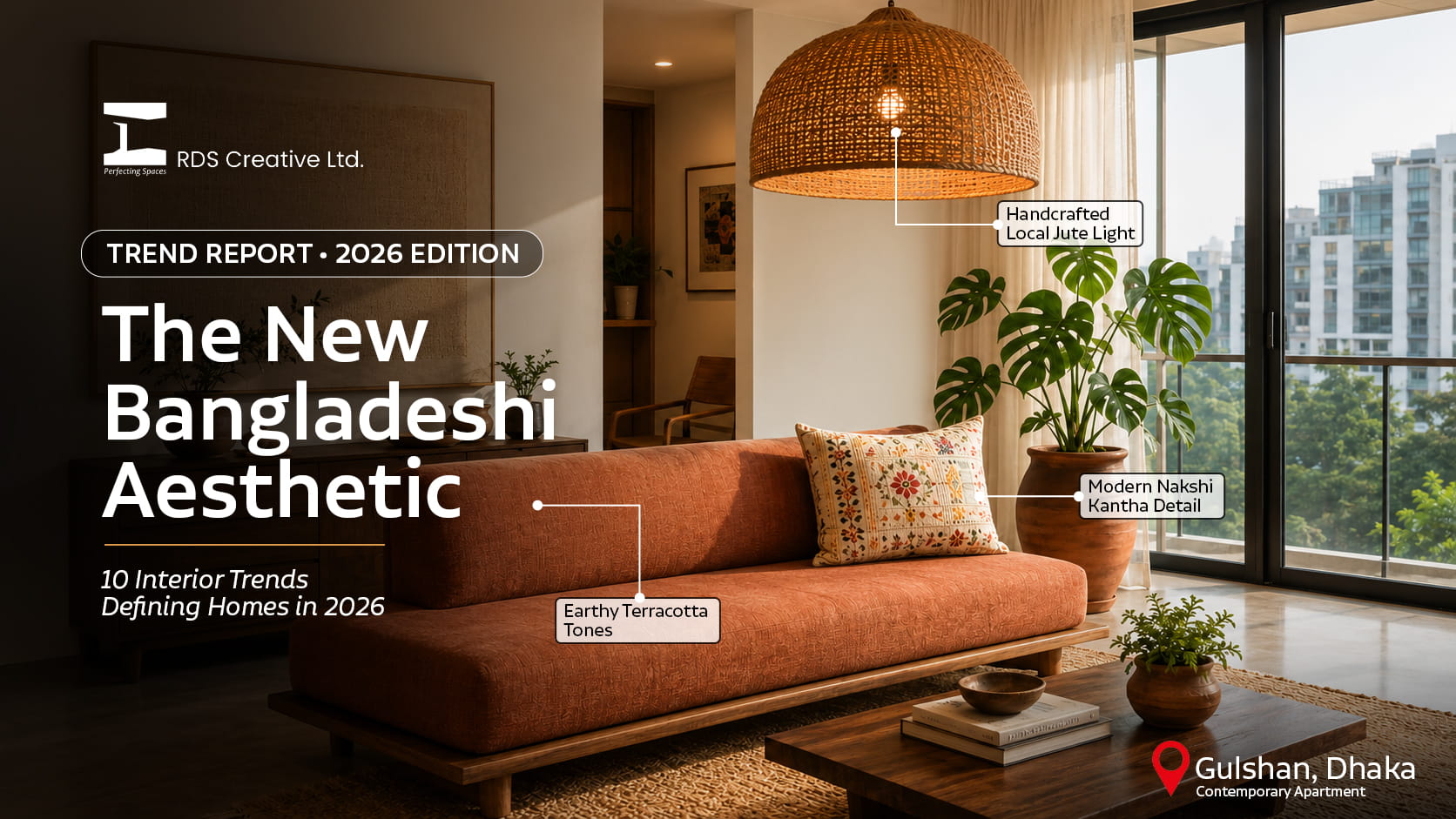
- Nakshi kantha-inspired textiles used as throw cushions, wall art, or bedspreads
- Terracotta and clay accents, echoing traditional Bengali pottery, used as decorative vases and wall panels
- Rickshaw art motifs reimagined as bold, minimalist wall graphics in youth-oriented spaces and cafés
- Traditional wood carving techniques applied to modern, clean-lined furniture silhouettes
This “heritage-meets-modern” approach gives homes and commercial spaces a distinctive identity that generic, imported design simply cannot replicate.
6. Warm, Earthy, and Muted Color Palettes
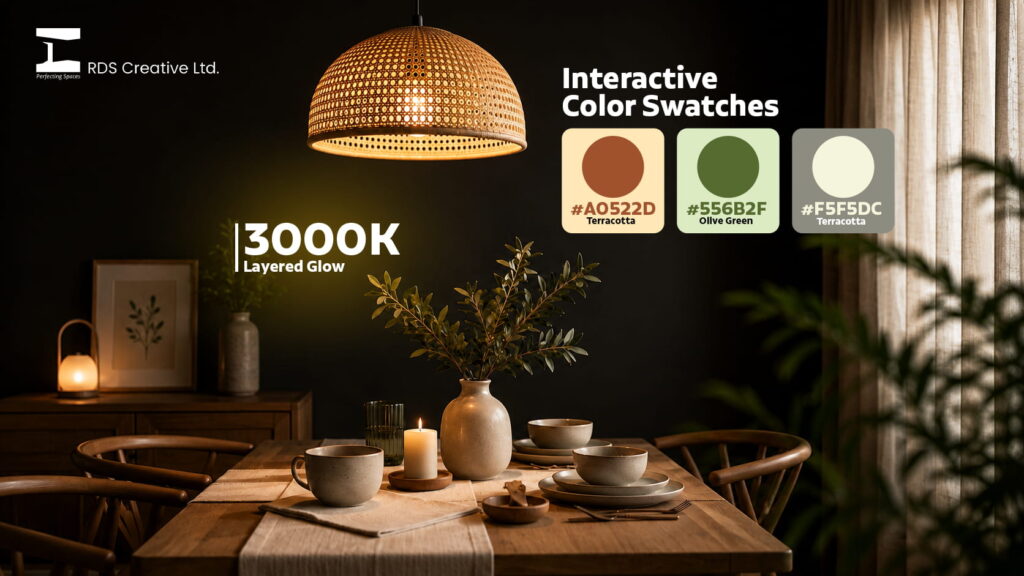
Bright, saturated color schemes are giving way to warmer, more grounded palettes in 2026. This shift suits both the tropical light quality of Bangladesh and the calming, sophisticated look many homeowners now prefer.
Popular palette directions include:
- Terracotta, ochre, and rust tones paired with off-white and cream
- Deep olive and forest greens, reflecting the biophilic trend
- Warm greys and taupe as a versatile neutral base for both homes and offices
- Sage and muted blue accents for a calmer, coastal-inspired feel in bedrooms
These tones also have a practical advantage: they hide dust and humidity marks better than stark whites, an important consideration for Dhaka’s air quality.
7. Smart Home Integration on a Practical Scale
Home automation is finally becoming accessible and relevant for middle- and upper-middle-income Bangladeshi households, not just luxury villas.
Expect wider adoption of:
- Smart lighting controlled via mobile apps, useful for managing load-shedding-related routines
- Automated curtains and blinds for light and heat control during peak summer months
- Video doorbells and smart locks, addressing rising urban security concerns
- Voice-controlled assistants integrated into living rooms and kitchens
The key trend here is practicality over spectacle — homeowners want smart features that solve real problems like power reliability and security, rather than pure novelty.
8. Open-Plan Living with Defined Zones
Even within compact apartments, Bangladeshi homeowners are moving toward open-plan layouts that make small spaces feel larger – while still creating a sense of distinct zones for different activities.
Techniques being used:
- Half-height partitions or open shelving to separate living and dining areas without blocking light
- Rugs and flooring changes to visually define zones within one open room
- Ceiling treatments, such as false ceiling drops, to signal a change in “room” without adding walls
- Furniture arrangement as the primary zoning tool, rather than permanent construction
This approach maximizes natural light and airflow — both crucial in Bangladesh’s climate – while keeping renovation costs and structural changes to a minimum.
9. Statement Lighting as a Design Centerpiece
Lighting is emerging as one of the most transformative — and cost-effective — ways to elevate an interior in 2026. Rather than relying purely on ceiling-mounted fixtures, Bangladeshi designers are treating lighting as a design statement in its own right.
Look out for:
- Cane and jute pendant lights, blending sustainability with local craft aesthetics
- Layered lighting schemes combining ambient, task, and accent lighting for flexibility
- Warm-toned LED fixtures that reduce electricity consumption while creating a cozy atmosphere
- Sculptural floor lamps used as focal points in living rooms and reception areas
Well-planned lighting can make a modestly sized apartment feel significantly more premium without any structural renovation.
10. Wellness-Centered and Multi-Sensory Spaces
Post-pandemic priorities around home wellness haven’t faded — they’ve matured into more deliberate design choices, especially as more Bangladeshis spend extended time working from home.
This trend includes:
- Dedicated meditation or prayer corners, thoughtfully lit and separated from high-traffic areas
- Home office nooks designed with ergonomic furniture and glare-free natural light
- Acoustic considerations, using textiles and rugs to dampen noise from Dhaka’s traffic-heavy streets
- Aromatic and textural layering — soft furnishings, natural scents, and tactile materials that make a home feel restorative
For commercial spaces like clinics, co-working offices, and boutique retail stores, this wellness focus is becoming a genuine competitive differentiator.
Final Thoughts: Designing for the Bangladesh of 2026
The strongest thread running through all ten of these trends is contextual intelligence — design that responds honestly to our climate, our space realities, our culture, and our evolving lifestyles, rather than importing solutions built for entirely different environments.
Whether you’re planning a full home renovation, refreshing a single room, or fitting out a new commercial space, the smartest approach for 2026 is to blend global design sensibility with distinctly Bangladeshi practicality — durable materials suited to humidity, furniture that respects space constraints, and aesthetics that feel authentically ours.
Ready to bring your 2026 interior vision to life? Our design team specializes in creating spaces that are beautiful, functional, and built for the realities of Bangladeshi living. Get in touch today for a personalized interior design consultation and let’s plan a space that truly works for you.
Related Posts