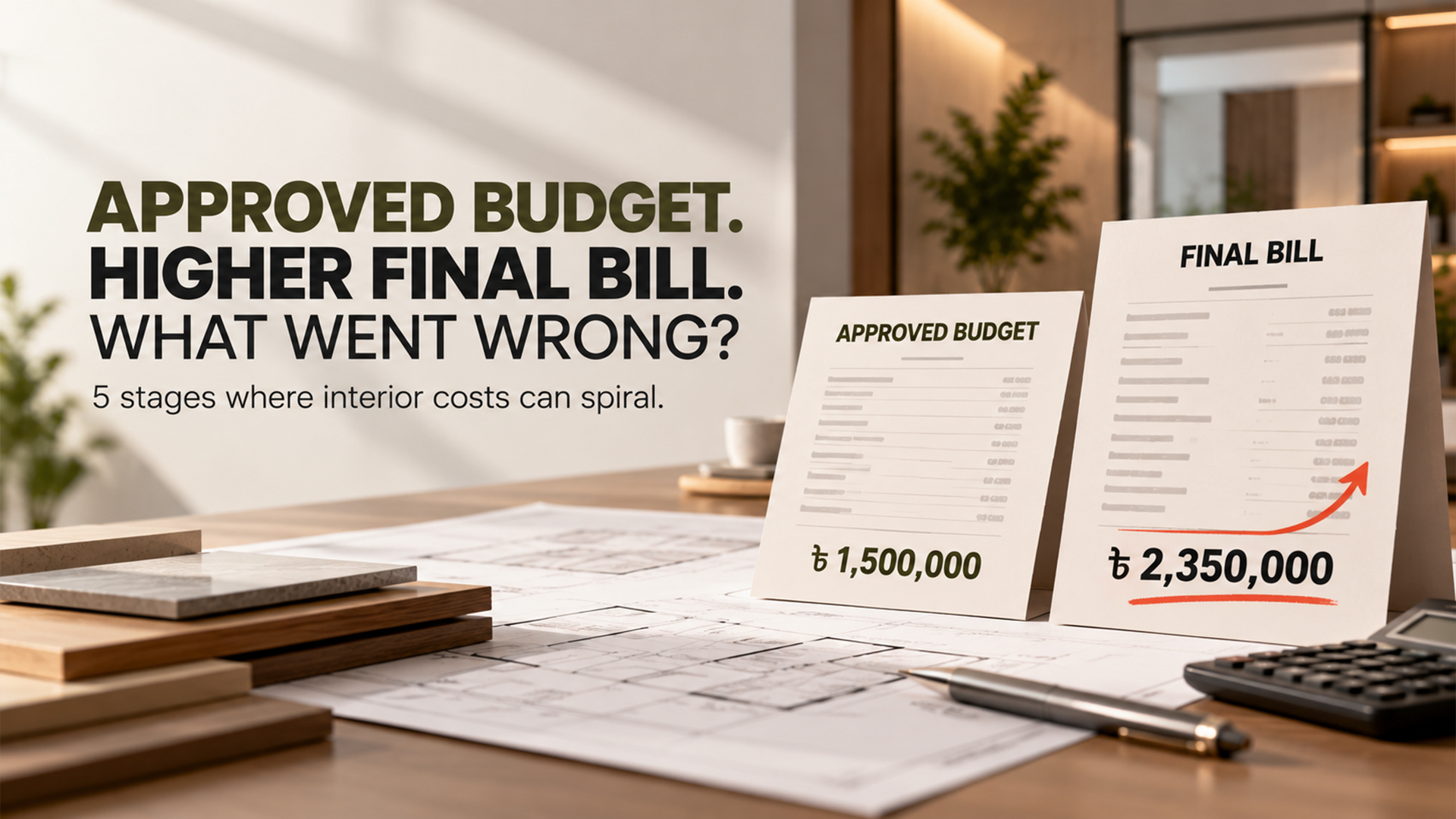
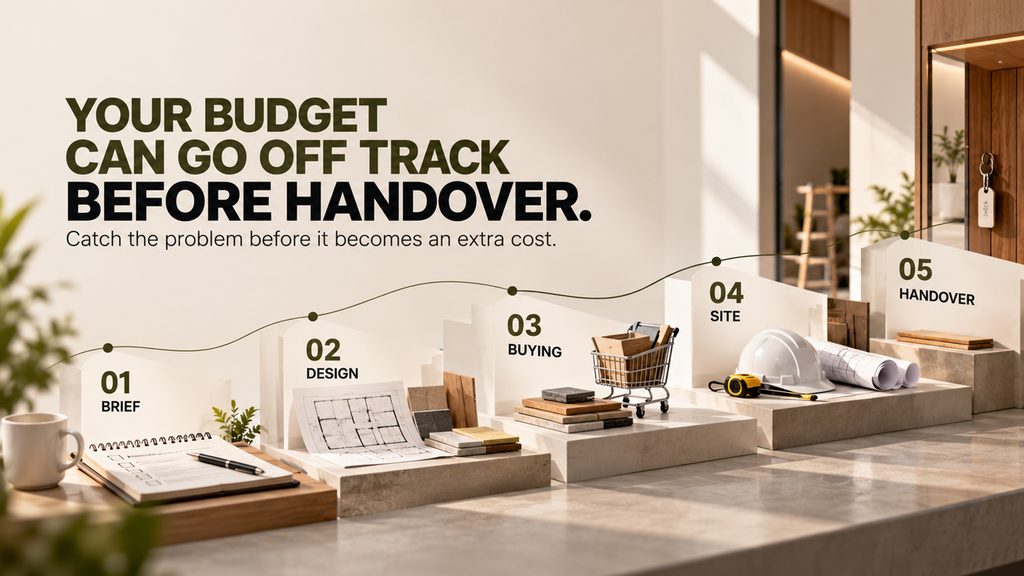
When an interior project in Dhaka ends up costing more than planned, the usual explanation is a single moment: a contractor added a charge, a material price jumped, or a design changed. In our experience the real story is rarely one moment. Budgets leak slowly, at several points between the first conversation and the final handover, and each leak looks small when it happens.
This guide follows a project from start to finish and shows where the money tends to slip away at each stage, including a few leaks that are specific to building and working in Dhaka. If you already know the root causes in general, our guide on why Dhaka interior projects go over budget and how project management fixes it covers the process side. This one is about timing: when each problem appears, and what to do before it does.
Where Budgets Leak: The Five Stages
| Stage | Typical Leak | Earliest Fix |
| 1. Brief and budget setting | A budget with no ceiling or priorities | Fix a ceiling and rank must-haves vs nice-to-haves |
| 2. Design | Design that drifts above the budget it was meant to fit | Design to the budget, with costed options at each decision |
| 3. Procurement | Late ordering, supply gaps, and substitutions | Confirm specifications and lead times before work starts |
| 4. Execution on site | Hidden site conditions, rework, and building restrictions | Survey the site early and plan around building rules |
| 5. Handover | Snagging and finishing items nobody budgeted for | Agree a snag process and defect period in writing |
Stage 1: Brief and Budget Setting
Many overruns are decided before any design exists. A homeowner says “around this much” with no ceiling and no priorities, and the project quietly becomes whatever the design grows into.
What goes wrong:
- The budget is a hope, not a limit
- Everything is treated as equally important, so nothing can be traded off
- Family members hold different expectations that surface mid-project
What we do:
- Agree on a firm ceiling and a separate allowance for contingency
- Split the wish list into must-have, should-have, and later items
- Hold one early conversation with everyone who will have an opinion, so decisions are not reopened on site
Stage 2: Design
Design is where budgets drift upward most gently. Each option looks reasonable alone. A better laminate here, a feature ceiling there, a custom unit instead of a standard one. Added together, they move the project well past the original figure.
What goes wrong:
- Renders are approved before costs are attached to them
- Upgrades are shown as tempting options with no price context
- Finishes are chosen from showroom samples with no link to the budget
What we do:
- Present design options with their cost impact visible, so every upgrade is a decision, not a surprise
- Keep a running tally against the ceiling as choices are made
- Freeze the design before execution, and treat later changes as formal variations
Stage 3: Procurement
This is the stage where Dhaka’s supply realities show up. Materials and fittings have lead times, imported items depend on shipping and clearance, and popular finishes can run short.
What goes wrong:
- Orders are placed late, so work waits and labor sits idle
- A specified material becomes unavailable, and a substitute changes cost and quality
- Items arrive in separate batches with mismatched shades or batches
What we do:
- Confirm every key specification and its lead time before work begins
- Place long-lead orders early, and name an approved alternative in advance so a stock-out does not become an improvised decision
- Check delivered materials against the specification before installation
For help structuring this phase, see our interior project management service.
Stage 4: Execution on Site
Site work is where the unexpected actually appears, and where an unprepared budget absorbs it as a new charge.
Site conditions: Older Dhaka buildings often hide surprises behind walls, such as old wiring, damp, or uneven surfaces. A survey before pricing reduces these.
Building rules and logistics: Many apartment buildings limit working hours, noisy work, or the use of lifts for materials. These limits affect how fast work can go and how many trades can work at once, so they should be factored into the plan.
Calendar and weather: Monsoon rains can slow work and drying times for finishing work, and holiday periods can reduce labor availability. A schedule that ignores both tends to slip.
Rework: Work done before wiring, plumbing, or measurements are confirmed often has to be undone.
What we do:
- Survey the site and open up doubtful areas before finalizing the quotation
- Confirm building management rules and lift access in writing at the start
- Sequence trades so finishing work does not start until services are complete
- Build a realistic schedule that accounts for weather and holiday periods
Stage 5: Handover
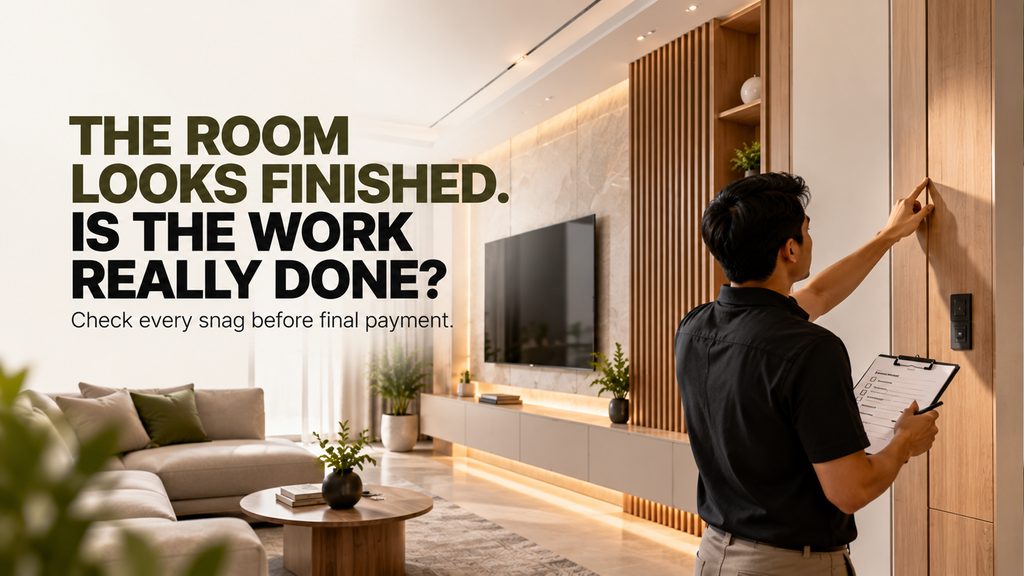
The last stage is the one most people forget to budget for. Final cleaning, snag fixes, small adjustments, and missing items do not vanish. Without a plan, they become disputes.
What goes wrong:
- No agreed process for listing and fixing snags
- No defect period, so post-handover problems are argued case by case
- Final payment is released before the snag list is closed
What we do:
- Walk the space with the client against a written snag list
- Agree a defect-correction period in the contract
- Release the final payment only after the snag list is closed

The Role of Contingency
Across every stage, contingency is the line that decides whether surprises become crises. A clear, openly stated contingency absorbs the unexpected. Without one, every surprise is a new charge that has to be argued about.
For readers who want a formal reference on how professional cost planners treat allowances and risk, the RICS New Rules of Measurement: Order of cost estimating and cost planning explains how contingency and risk allowances are built into cost plans. It is written for professional use, but the principle applies to a single apartment as much as a large building.
A Stage-by-Stage Self-Check
Use this before each stage of your own project begins.
Before design starts
- Is there a firm ceiling, with contingency kept separate?
- Are priorities ranked as must-have, should-have, and later?
Before execution starts
- Is the design frozen and tied to an itemized BOQ?
- Are long-lead items ordered, with a named alternative for each?
- Has the site been surveyed, and building rules confirmed in writing?
Before handover
- Is there a written snag process and defect period?
- Is final payment tied to closing the snag list?
If a box is empty at the moment that stage begins, that is the leak to close first.
Frequently Asked Questions
Is it normal to expect some overrun on an interior project? Small variances are common, which is why a stated contingency exists. The real problem is unplanned and untracked overrun, not variance itself.
Which stage causes the most overruns? It varies by project, but unclear briefs and uncontrolled design drift in the first two stages cause more overruns than any single trade or material.
Does a fixed-price contract remove the risk? Not completely. A fixed price protects against some changes in price, but it does not remove scope changes, site surprises, or poorly defined specifications. Those still need to be managed.
Should we pay more for a project manager? A dedicated manager costs something, but it addresses the coordination, tracking, and change-control gaps that drive many overruns. The question is whether the process around your project is strong enough without one.
Close the Leaks Where They Open
Budgets rarely break in one dramatic moment. They erode at predictable points, and most of those points can be closed early: a firm ceiling in the brief, costed options in design, early orders in procurement, a surveyed site in execution, and a written snag process at handover.
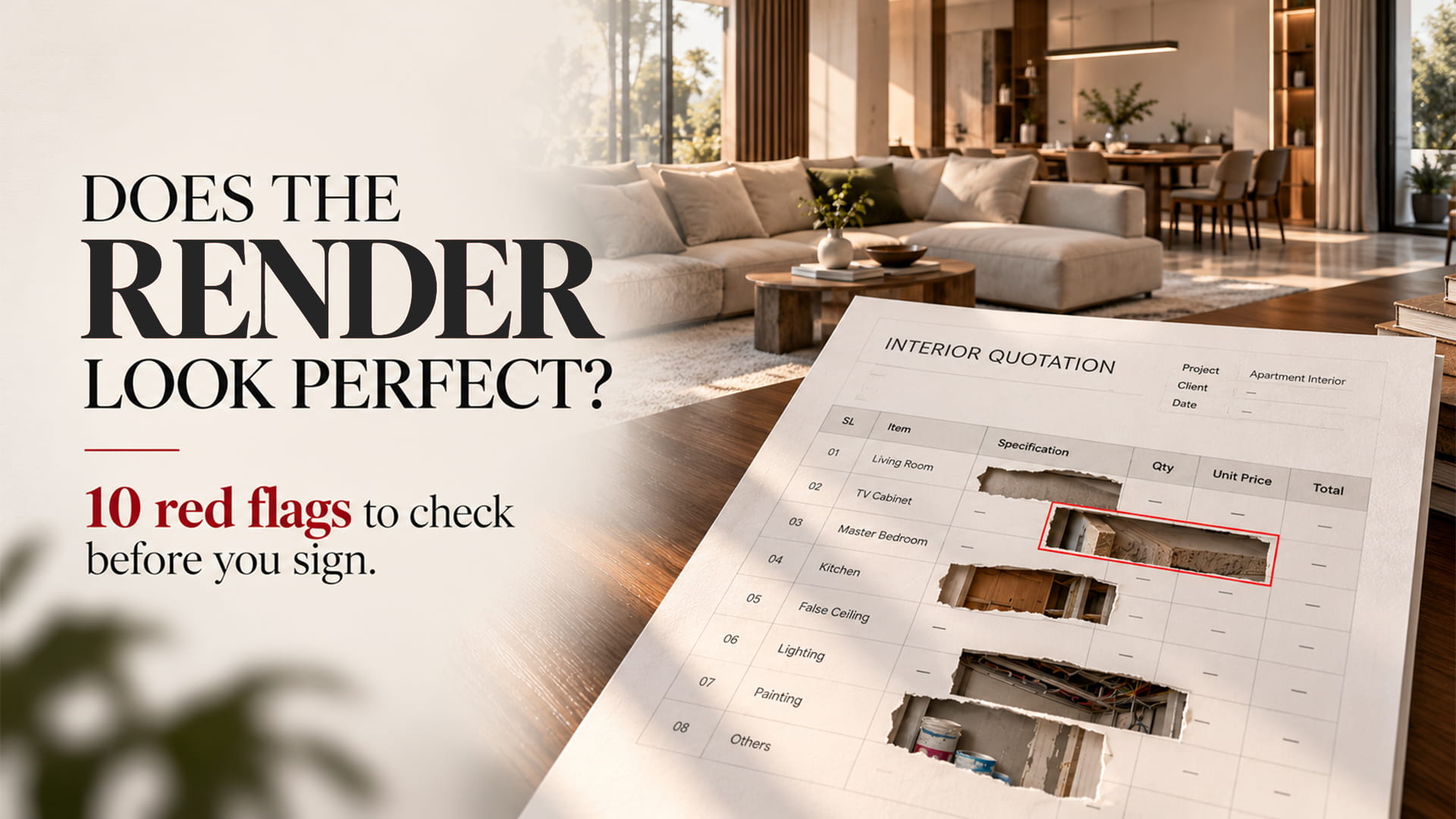
Planning a project and want it to stay on budget? Request an itemized quotation built around your space, or contact RDS Interior to talk through your plan before any money moves. For an earlier warning on the paperwork side, read our guide to red flags in an interior design quotation.
Related Posts